

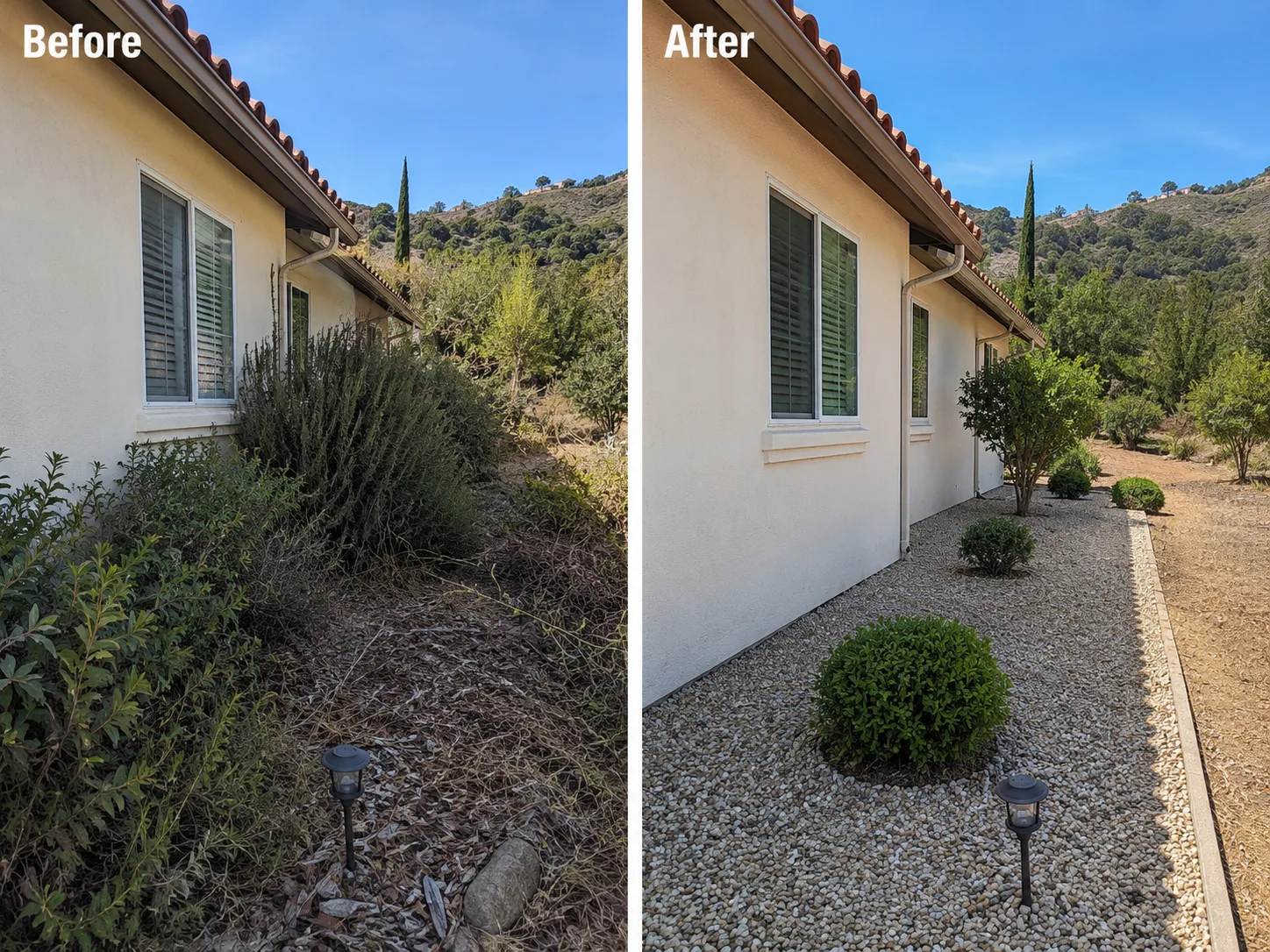
Perimeter defense for the first feet around your home
RF1 helps homeowners reduce near-structure fuel, create Zone 0 separation, and document the work clearly for insurance and inspection conversations.
What perimeter defense includes
The goal is simple: remove ignition pathways next to the structure and make the surrounding landscape harder for embers and surface fire to use.
Zone 0 clearing
Remove leaves, mulch, stored items, and combustible plants from the first 5 feet around the home.
Defensible space layout
Thin and separate vegetation across the 5 to 30 foot zone so fire has less continuous fuel.
Hardscape transitions
Plan gravel, pavers, metal edging, and other noncombustible breaks where they matter most.
Documentation package
Deliver dated photos and a concise scope of work for insurance, renewal, or inspection conversations.
Highest priority
The problem is usually not the yard. It is the path into the house.
Perimeter defense looks for the small links that connect embers and surface fire to vulnerable parts of the structure. We focus on the areas that are easy to overlook but easy for fire to use.
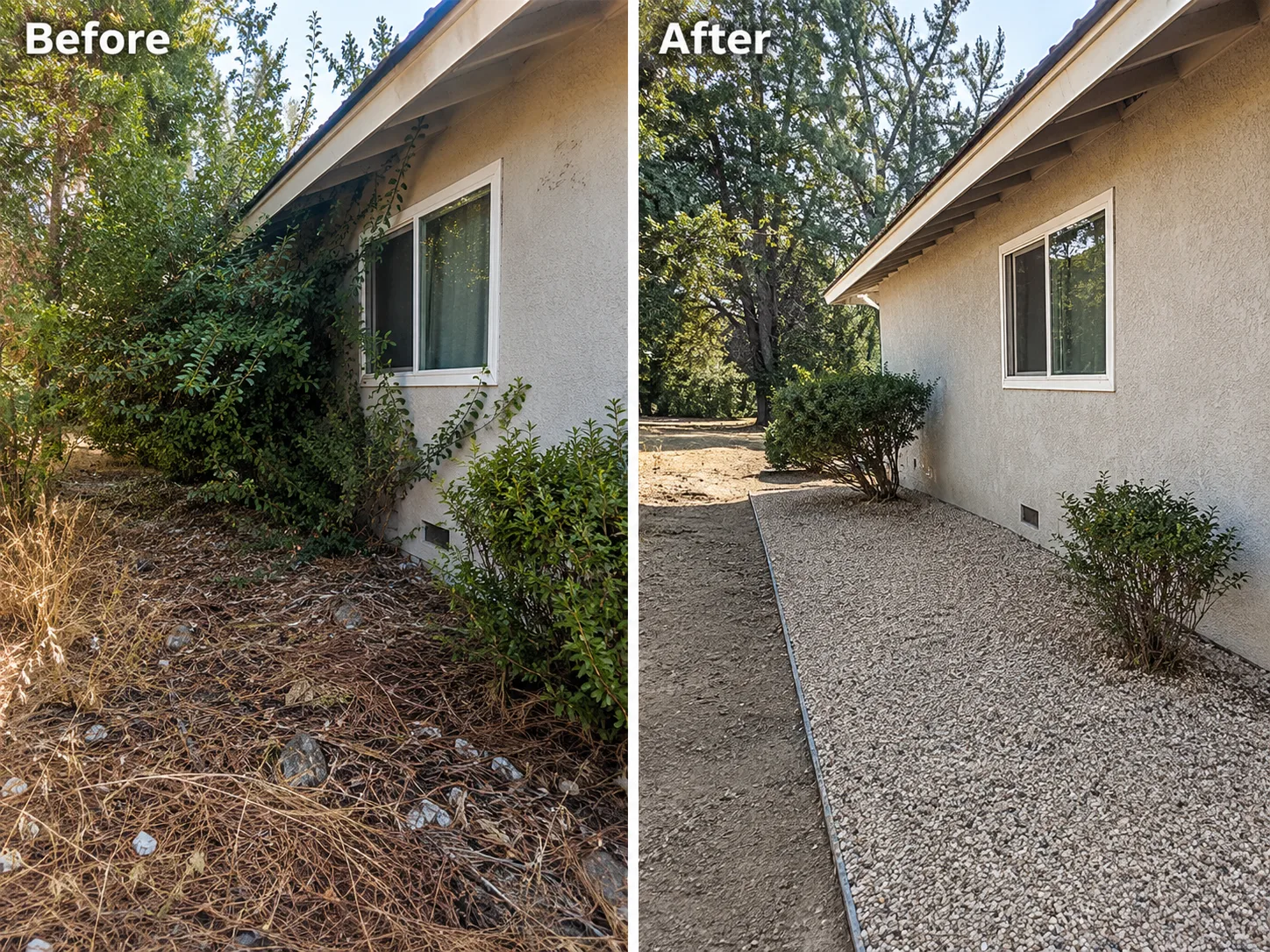
Visual proof
The work should be obvious in one photo
Good perimeter defense creates a visible change: less combustible material touching the home, clearer access for maintenance, and a cleaner record for insurance or inspection conversations.
See the Zone 0 checklist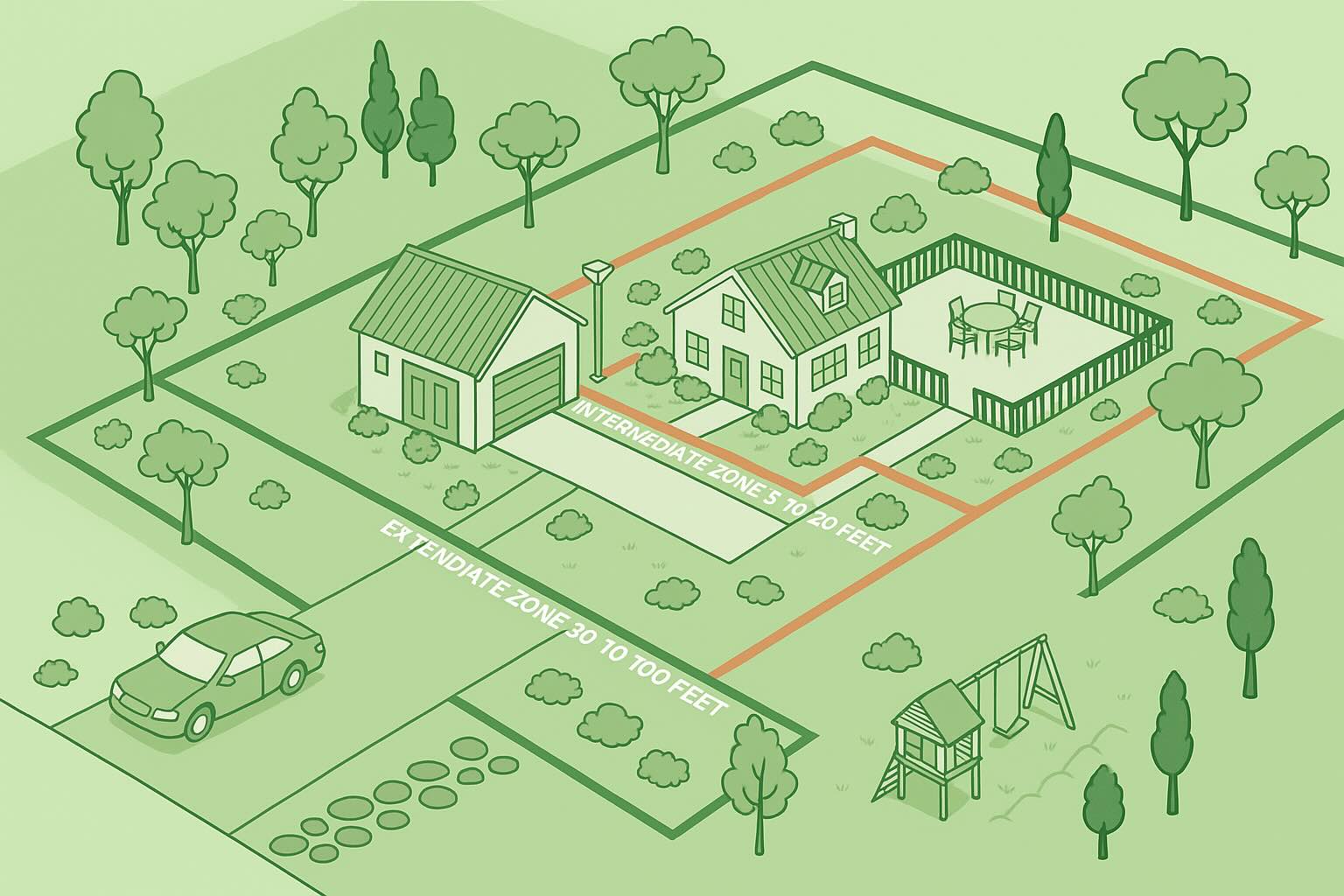
Built around CAL FIRE defensible space priorities
Perimeter defense starts with the ember-resistant zone next to the home, then works outward through vegetation spacing, debris removal, and practical maintenance routines.
- Prioritize the first 5 feet around walls, decks, vents, fences, and attachments.
- Reduce ladder fuels and continuous plantings in the 5 to 30 foot area.
- Provide before and after photos that make completed work easy to review.
How it works
A practical sequence for cleaner, easier-to-maintain defensible space
Walk the ignition edge
We review the first 5 feet around walls, decks, vents, fences, stairs, gates, utility penetrations, and stored items.
Prioritize the work
We separate quick removals from design decisions, hardscape changes, and any contractor work that needs sequencing.
Build the cleaner perimeter
Crews reduce combustible material, reset planting edges, open maintenance access, and create noncombustible breaks.
Package the proof
You receive dated before and after photos plus a simple summary that is easier to share with your agent or inspector.
Who this helps
One cleanup can serve more than one deadline
Homeowners
Get a prioritized plan before wildfire season, especially if Zone 0 work keeps falling off the maintenance list.
Insurance
Organize clear before and after evidence when an agent asks what mitigation work has actually been completed.
Sellers
Prepare the defensible-space story before escrow questions, AB-38 conversations, or buyer inspection requests.
Common questions
Perimeter defense FAQs
Is perimeter defense the same as defensible space?
Perimeter defense is the near-home part of defensible space. It focuses first on the 0 to 5 foot area where embers, debris, fences, decks, and plants can create direct ignition pathways into the structure.
Do I have to remove every plant near my house?
Not always. The work is about reducing ignition pathways and maintenance problems. Some plants may stay if they are separated, irrigated, low-litter, and not touching openings, siding, fences, or deck edges.
Can this help with insurance renewal?
It can help you document mitigation work clearly. RF1 provides photos and a concise scope summary, but your carrier decides how it evaluates renewal, discounts, or underwriting requirements.
What should I do before an assessment?
If you have an insurance letter, inspection note, or photos from your agent, bring them. Otherwise, we can start with a property walkthrough and identify the highest-impact items.
Check your Zone 0 risk by address
Start with the address tool for a quick risk read. Book a field assessment when you want RF1 to walk the perimeter and build the mitigation scope.