
Wildfire home hardening guide
Home hardening in Los Angeles, in the right order.
What to fix first, what it typically costs, who inspects, and which upgrades earn insurance discounts. For homes in Pasadena, Altadena, La Cañada Flintridge, Malibu and across LA County.
Updated November 10, 2026
Up to 90%
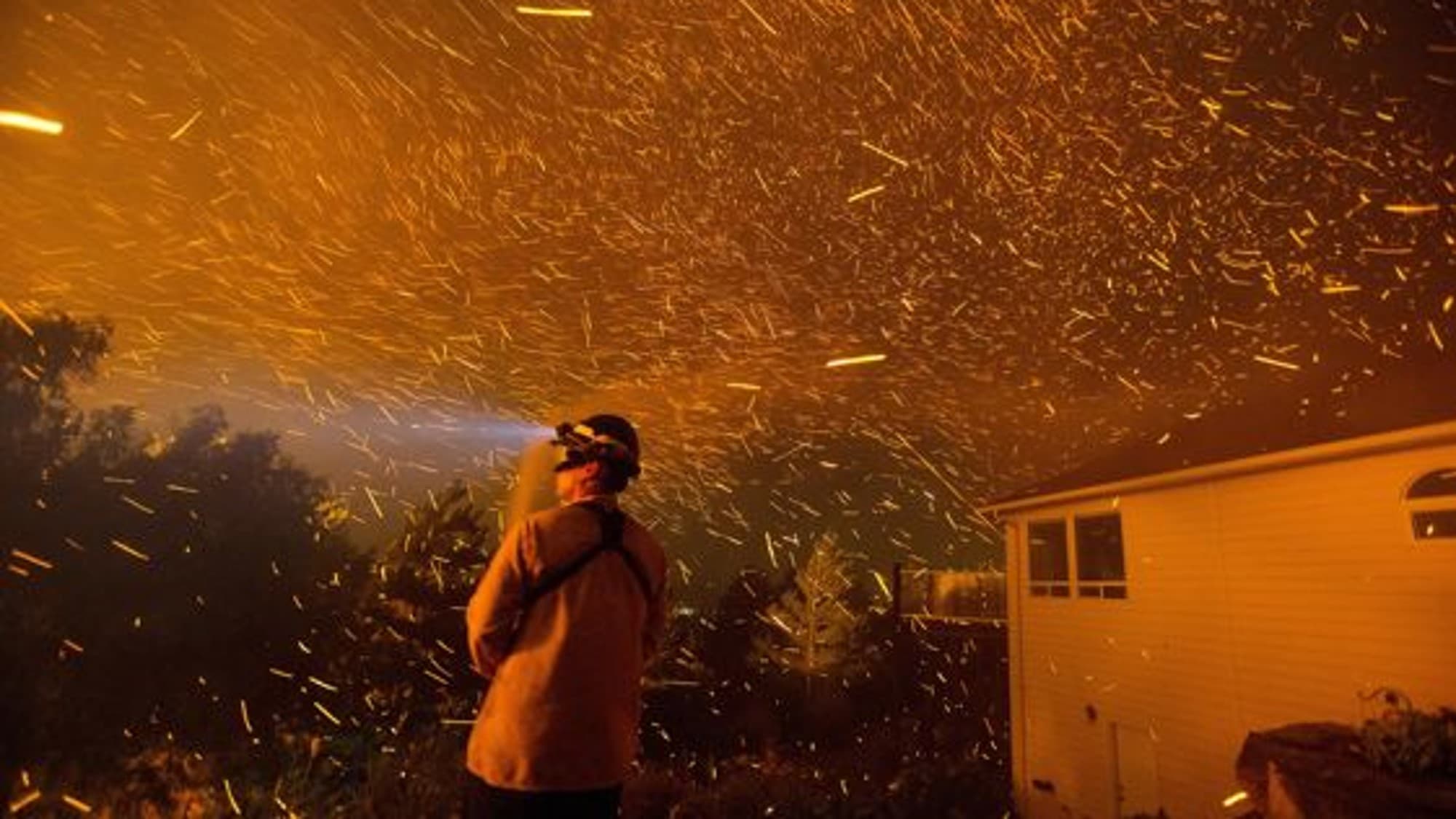
of home ignitions in wildfires come from embers, not the flame front, according to IBHS.
54% vs 36%
IBHS found LA homes with four key hardening features were far more likely to avoid damage in the 2025 fires than homes with only one or two.
7.8%
of 247 LA homes IBHS inspected after the 2025 fires had proper fire-safe vents with 1/8-inch or finer metal mesh.
The short answer
Stop the embers first. Then the big upgrades.
Home hardening means changing the house itself so it's less likely to catch fire: closing the openings embers get through, removing what burns right next to the walls, and using materials that hold up to heat. In Los Angeles, the cheapest fixes are also the ones that stop the most common way homes ignite. Here's the order we recommend.
- 01
Close the ember entry points
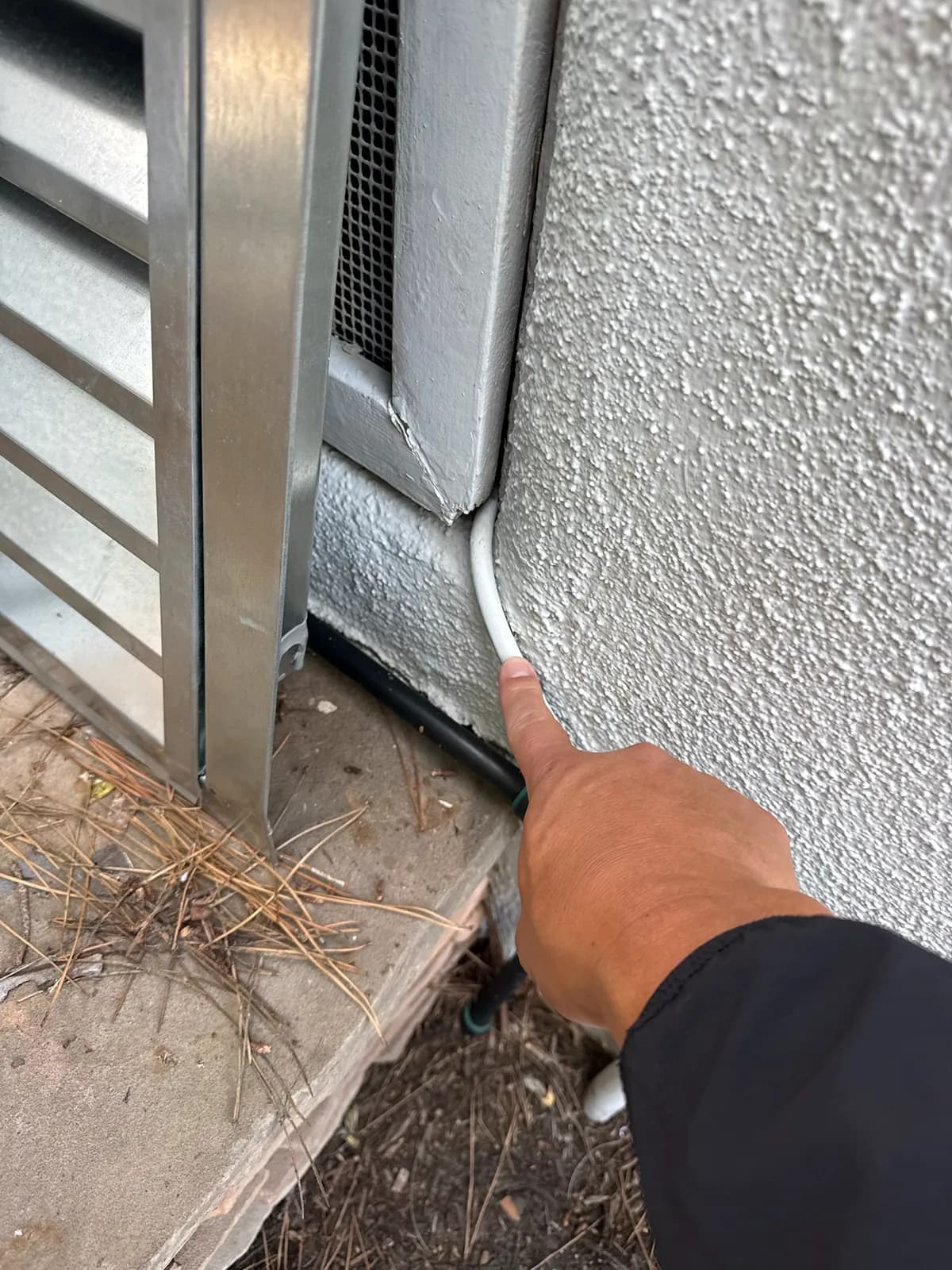
Vents with 1/4-inch or no mesh, gaps around vents, and gaps around the garage door. Embers that get into an attic or crawlspace can burn the house from the inside.
- 02
Clean the roof edge and gutters
Dry leaves and needles in a gutter are a landing pad for embers. Clean them, then add noncombustible metal gutter guards.
- 03
Clear the first 5 feet (Zone 0)
Swap bark mulch for gravel or pavers, move firewood, plants and furniture away from the walls, and keep the strip under windows and vents bare.
- 04
Break the fire's path to the walls
Give a wood fence a noncombustible section where it meets the house, clear under the deck, and add metal flashing where the deck meets the wall.
- 05
Upgrade the big pieces when they're due
Windows, siding, eaves and the roof cost the most. Do them when they need replacing anyway, unless you still have a wood shake roof.
Priorities and costs
What each fix does, and what it costs.
Listed from the most protection per dollar to the least. A 2024 study for CAL FIRE priced a focused ember package (vents, deck flashing, metal gutter guards and gravel) at $10,000 to $15,000 for a typical home. A minimal retrofit can start around $2,000.
| Measure | Why it matters | Typical installed cost | Who it's for |
|---|---|---|---|
| Ember-resistant vents | A direct path for embers into the attic and crawlspace | About $53 (round eave vent) to $421 (gable vent) per vent | Most homes built before the 2008 wildfire code |
| Sealing gaps around vents and the garage door | Embers slip through gaps wider than 1/8 inch | About $4.40 per foot of fire-rated caulk; about $280 for a garage door seal | Every home |
| Metal gutter guards and a clean roof edge | Keeps dry debris from catching at the roofline | About $4.50 per foot; cleaning costs little | Homes with trees over or near the roof |
| Zone 0: the first 5 feet | Fuel touching the walls carries fire to vents, windows and siding | About $2,800 to replace bark mulch with gravel; clearing debris costs little | Every home. State Zone 0 rules are pending, not yet in force |
| Noncombustible fence section at the house | A wood fence can carry fire straight to the wall | About $9,700 for both sides in fiber cement; metal can cost less | Homes with a wood fence attached to the house |
| Deck: clear underneath and add flashing | Debris under a deck is fuel right up against the house | About $1,000 to more than $9,000 | Homes with a wood deck |
| Enclosed eaves | IBHS testing found open eaves let in more embers than enclosed ones | About $4,000 per 40-foot side, with vents | Homes with open rafter tails |
| Dual-pane or tempered windows | Helps glass hold up against heat | About $2,200 to $2,500 for two small windows | When windows are due for replacement |
| Noncombustible siding | Matters most where homes are close together | About $4,000 per 480 sq ft side | Homes close to their neighbors |
| Class A roof | A wood shake roof is a large ignition surface | About $6,300 per 1,000 sq ft, wood shake to composition | Only homes that still have wood shake |
Costs are rounded from the 2024 Headwaters Economics study with fire scientist Stephen Quarles, funded by CAL FIRE, using Northern California prices. Southern California tends to land within 10 percent. They're a benchmark, not RF1 quotes, and your home will differ. The order is RF1's read of the research. For the evidence behind each item, see home hardening ranked by what works.
Guides by part of the house
Go deeper on each part of the house.
What's required
Is home hardening required? Only at certain moments.
- Building new or rebuilding
- Since January 1, 2026, new homes in fire hazard zones fall under California's 2025 Wildland-Urban Interface Code (Title 24, Part 7), which replaced the old Chapter 7A. For vents, Section 504.10 calls for vents listed by the State Fire Marshal or tested to ASTM E2886. If you're rebuilding after the Eaton or Palisades fires, your plans have to meet it.
- Every year, in a fire hazard zone
- State law (Public Resources Code 4291) requires defensible space out to 100 feet or your property line. Your local fire department enforces it with spring brush clearance inspections.
- Zone 0, the first 5 feet
- Not in force yet. The Board of Forestry approved Zone 0 rules on August 19, 2026, then withdrew them from legal review on September 8 to make edits. The Board re-adopted an edited version on November 5 and plans to send it to the Office of Administrative Law on or after November 13. Nothing is enforceable until the rules are filed with the Secretary of State. Zone 0 law: latest status
- Selling your home
- AB 38 requires sellers in High or Very High fire hazard zones to give the buyer defensible space documentation, or sign an agreement for the buyer to get it. For homes built before 2010, the seller also discloses hardening gaps, like vents with openings larger than 1/8 inch, and since July 1, 2025 hands over the state's low-cost retrofit list. It's a disclosure, not an order to fix. AB 38 inspection help
- Just living in an older home
- No state rule makes an existing home replace its vents, roof or windows. Hardening is voluntary, which is exactly why it's worth doing in order of protection per dollar.
Who inspects in LA
Three agencies, three sets of rules.
Annual inspections in Los Angeles look at vegetation and clearance, not your vents or roof. Which agency comes depends on where your parcel sits.
Los Angeles Fire Department (LAFD)
- Covers
- Very High Fire Hazard Severity Zone parcels inside the City of Los Angeles, including Pacific Palisades
- Checks
- Brush clearance and defensible space. Inspections begin May 1.
- Fees
- No fee if you pass the first inspection. Fail it and you're billed $31. Fail the second and a $758 non-compliance fee is added. Check your parcel in LAFD's FIMS portal.
LA County Fire
- Covers
- Unincorporated areas like Altadena and Topanga, plus cities it serves, including La Cañada Flintridge and Malibu
- Checks
- Annual defensible space inspections, starting around May 1 inland and June 1 on the coast. Also takes AB 38 inspection requests in areas it serves.
- Fees
- Parcels declared hazardous get a $151 inspection fee on the property tax bill. Forced abatement adds $1,647 in enforcement costs on top of the contractor's bill.
Pasadena Fire and other city departments
- Covers
- Cities with their own fire departments, like Pasadena
- Checks
- Their own brush clearance programs. Pasadena Fire sends thousands of inspection notices each spring.
- Fees
- Each city sets its own timeline and fees, so read your notice. The clearance standards are similar everywhere.
Got a notice? Our brush clearance guide covers deadlines, and our defensible space inspection checklist walks through what inspectors look for. Not sure you're in a zone? Check your fire hazard severity zone. Selling? See AB 38 inspection help. Starting with the first 5 feet? See Zone 0 defensible space.
What it gets you
Insurance discounts are the real money.
Under California's Safer from Wildfires rules, admitted insurers that price wildfire risk must offer discounts for hardening actions, including a Class A roof, ember-resistant vents, enclosed eaves, a cleared area under the deck and the 5-foot ember-resistant zone. The full set plus IBHS Wildfire Prepared Home certification ranges from about 2.6 percent to over 50 percent off, depending on the carrier.
On the FAIR Plan, policies dated November 15, 2025 or later can get up to 16.4 percent off dwelling coverage.
Rules don't always match. For vents, the regulation points to listed vents, while the Department of Insurance's consumer page mentions 1/8-inch mesh. So ask your insurer what proof they accept before you start, and keep photos of every fix.
Dropped or facing a non-renewal? Start with the non-renewal guide. Need proof for your insurer? See insurance documentation.
Help paying for it
Grants for LA homes? Not yet.
- AB 888 Safe Homes grant
- Law, but no funded grants and no application portal.
- SB 894 hardening loans
- Signed September 29, 2026. Needs funding and setup before any loans go out.
- CWMP no-cost retrofits
- Runs in six counties, none of them in Southern California.
- LA County Fire
- Its defensible space program is inspection and enforcement, not financial help.
- Santa Barbara County
- The Fire Safe Council lists a rebate pilot of up to $2,500 for low-cost retrofits. Confirm it's still open first.
Details and updates in California home hardening grants, or check your address in the Grant Finder.
How RF1 helps
One plan, one contract, every fix documented.
- 01
Assess the whole property
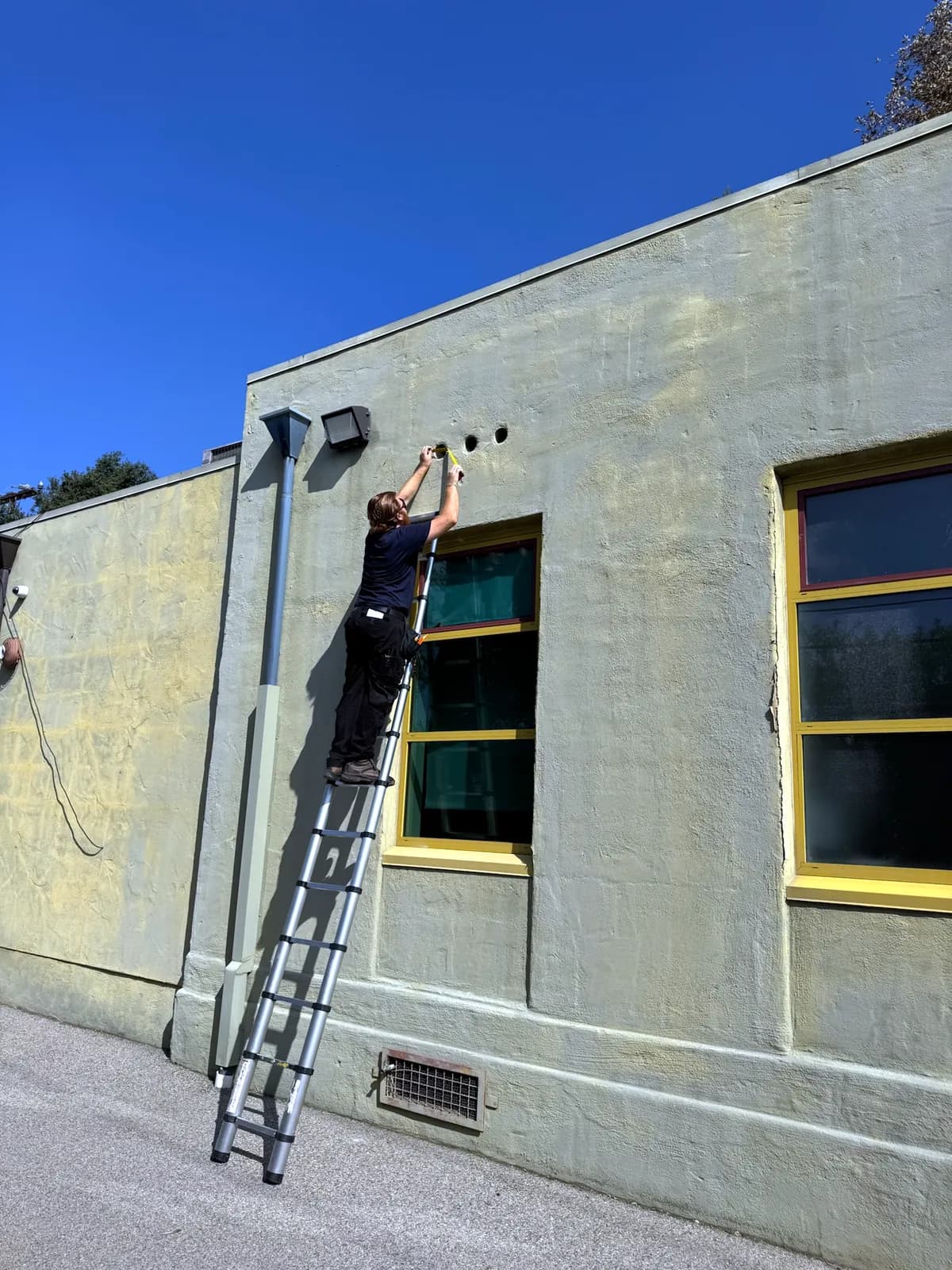
Mark flies a drone over your house and the land around it, then walks the property. He checks what CAL FIRE flags as high risk, what fire code and Zone 0 rules ask for, and what insurers look for.
- 02
Price a plan in order
You get a prioritized fix list with cost ranges, most protection per dollar first, and which items count toward insurance discounts.
- 03
Coordinate the work
RF1 hires and manages pre-vetted contractors for vents, Zone 0, fencing and roof edges, so you deal with one company.
- 04
Build your proof
Before and after photos of every fix, packaged for your insurer or a future buyer.
Questions
Home hardening questions we hear most.
- How much does home hardening cost in Los Angeles?
- It depends on how far you go. A 2024 study for CAL FIRE priced a focused ember package (vents, deck flashing, metal gutter guards and gravel in place of bark mulch) at $10,000 to $15,000 for a typical home. A minimal retrofit can start around $2,000, and doing every upgrade to the highest level can top $100,000, which the study says usually isn't necessary. Single items are cheaper: about $53 to $421 per vent depending on the type. The study used Northern California prices and says Southern California tends to land within 10 percent.
- Is home hardening required in California?
- Not for an existing home. New homes and rebuilds in fire hazard zones must meet the 2025 California Wildland-Urban Interface Code. Every home in a hazard zone must keep defensible space out to 100 feet, which your fire department inspects. Zone 0 rules for the first 5 feet are coming but aren't in force yet. And when you sell, AB 38 requires you to disclose hardening gaps on homes built before 2010.
- Does home hardening lower my insurance?
- It can. Under California's Safer from Wildfires rules, admitted insurers that price wildfire risk must offer discounts for hardening actions like a Class A roof, ember-resistant vents, enclosed eaves and the 5-foot ember-resistant zone. The full set plus IBHS Wildfire Prepared Home certification ranges from about 2.6 percent to over 50 percent off depending on the carrier. The FAIR Plan offers up to 16.4 percent off dwelling coverage. Ask your insurer what proof they accept before you start.
- What should I harden first?
- Start with what stops embers, since IBHS says embers account for up to 90 percent of home ignitions. That means vents and gaps, a clean roof edge and gutters, and a clear first 5 feet. These are also the cheapest items. Save windows, siding and the roof for when they need replacing, unless you have a wood shake roof.
- Should I start with a new roof?
- Usually not. If your roof is already Class A, replacing it with another rated roof buys little protection. A wood shake roof is the exception: replace it. For most homes, the same money goes much further on vents, gutters and Zone 0.
- Who inspects my home for wildfire safety in Los Angeles?
- Your local fire department, and it looks at vegetation and clearance, not your vents or roof. LAFD covers hazard zone parcels in the City of Los Angeles, LA County Fire covers unincorporated areas like Altadena plus contract cities like La Cañada Flintridge and Malibu, and cities like Pasadena run their own programs. Hardening features come up when you build, when you sell under AB 38, or when you ask an insurer or IBHS to credit them.
- I'm rebuilding after the Eaton or Palisades fire. What applies?
- Your new home has to meet California's 2025 Wildland-Urban Interface Code, the wildfire building code that replaced Chapter 7A in 2026. For vents, that means State Fire Marshal listed or ASTM E2886 tested models. It's also the cheapest moment to add what the code doesn't require, like a gravel Zone 0 and a noncombustible fence connection, and to document it all for your insurer.
- Is there money to help pay for home hardening in LA?
- Not much yet. The AB 888 California Safe Homes grant is law but has no funded grants or application portal. SB 894, signed September 29, 2026, creates a hardening loan program that still needs funding and setup. The state's no-cost retrofit pilot (CWMP) only runs in six counties, none in Southern California. Today the real money is insurance discounts.
Sources
- Headwaters Economics and Quarles, Retrofitting a Home for Wildfire Resistance (2024, CAL FIRE funded), source of the cost figures
- IBHS findings on the 2025 Palisades and Eaton fires
- IBHS: embers account for up to 90 percent of home ignitions
- 2025 California WUI Code 504.10 vent requirements (Town of Paradise summary)
- Public Resources Code 4291 (defensible space)
- Civil Code 1102.6f (AB 38 hardening disclosure)
- CAL FIRE Low-Cost Retrofit List (January 1, 2026)
- Office of Administrative Law, recent actions on emergency regulations (Zone 0 filing status)
- LA County Fire, Defensible Space Annual Notice FAQs (2026)
- LAFD brush clearance requirements
- LAFD Fire Inspection Management System (FIMS)
- California Department of Insurance, Safer from Wildfires
- IBHS Wildfire Prepared Home 2025 Technical Standard
- Insurance for Good: which California insurers reward wildfire resilience
- AB 888 (California Safe Homes Act) statute text
- Governor's office: SB 894 signing (September 29, 2026)
- Cal OES: California Wildfire Mitigation Program homeowner page
Facts checked November 10, 2026. Zone 0 status as of November 10, 2026.
Home hardening across the LA foothills
RF1 coordinates wildfire hardening for homes from Pasadena and Altadena through the foothills, canyons, and coast to Santa Barbara. See how we work in your area:
- Altadena
- Pasadena
- La Cañada Flintridge
- Sierra Madre
- Malibu
- Topanga
- Pacific Palisades
- Brentwood
- Bel Air
- Calabasas
- Montecito
- Agoura Hills
- Thousand Oaks
- Santa Barbara
- Ojai
- Carpinteria
- La Crescenta
- Burbank Hills
- Hollywood Hills
Looking for hands-on defensible space help? Defensible space contractor for Los Angeles or browse all assessment areas.
Don't wait for the next red flag day. Start with one call.
A free assessment, a plan with prices, and one team to do the work. Pasadena, Altadena and across Southern California.