
California Wildfire Law
California Approved Zone 0, Then Pulled It Back. Here Is Where Things Actually Stand.
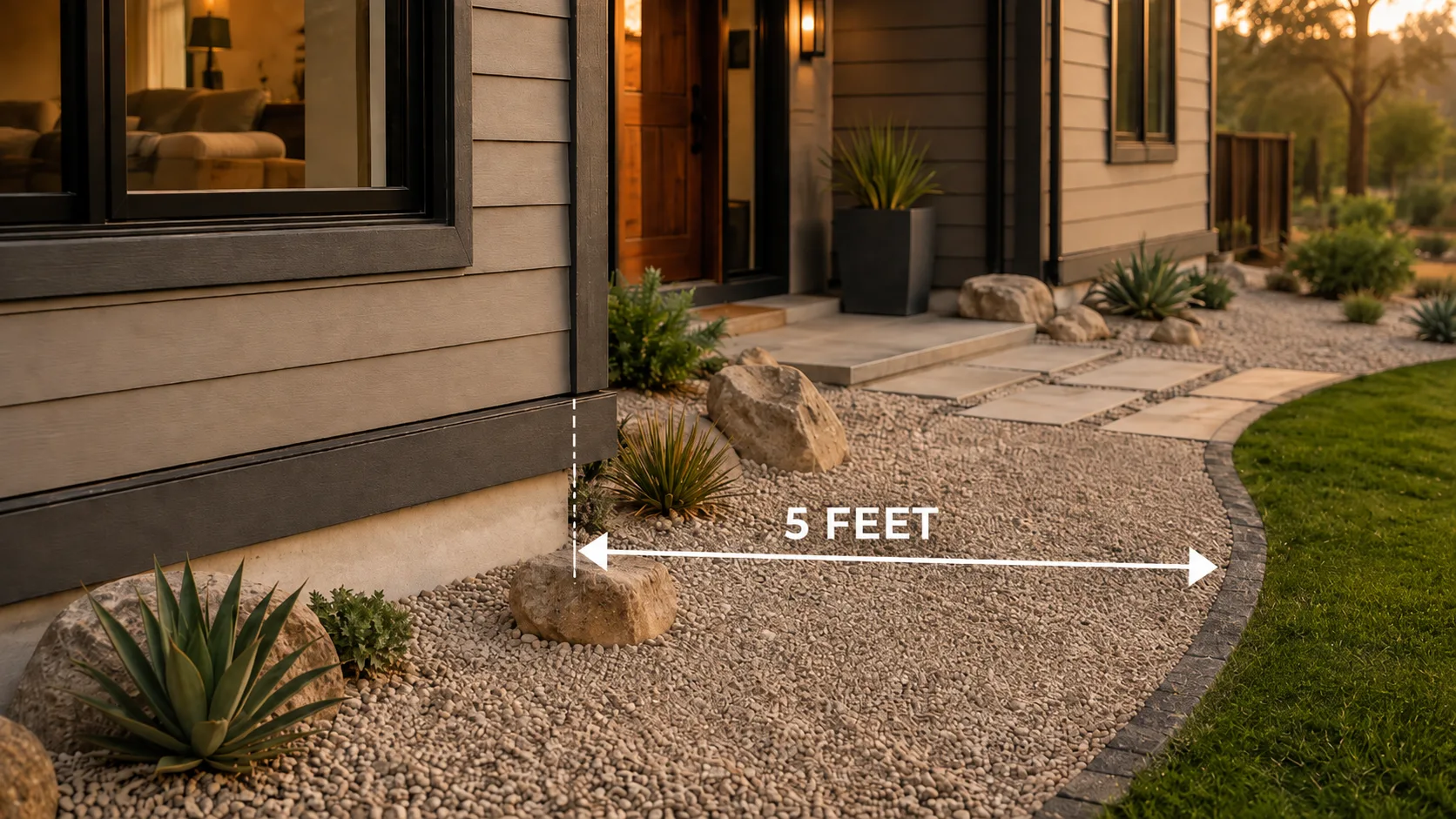
On August 19, 2026, after six years of drafts, missed deadlines, and some of the loudest land-use fights Los Angeles has seen in years, the California Board of Forestry voted unanimously to approve the final Zone 0 regulations. It is the first statewide rule in the nation governing the 5 feet immediately around your home.
Then, three weeks later, the state quietly pulled the rules back. On September 8 the Board withdrew its filing from the legal review that was supposed to make Zone 0 effective by the end of the month. The rules are not dead, but they are not law either, and the expected September start date is gone. Here is where things actually stand.
If you own a home in the Pasadena or Altadena foothills, in the canyons, or anywhere else mapped as high wildfire hazard, this rule is about your yard. The short version: the first 5 feet around the house eventually needs to be free of things that catch embers, on a timeline that starts gently and tightens over 5 years. The longer version is below, and it is less scary than the early drafts that had people planting protest signs.
First, is it actually law yet?
No, and this is where it gets bureaucratic. The approved rules went to the state Office of Administrative Law on August 28 for what was supposed to be a short legal review, with an effective date expected around the end of September. On September 8, the Board of Forestry withdrew the filing before that review finished. The state's own record lists emergency filing 2026-0828-03E as withdrawn. The Board calls the move procedural, a chance to fix technical edits and answer OAL's questions before refiling. As of late September there is no new effective date and no public timetable for resubmission.
What this is not: a repeal. The unanimous August vote stands, the substance below is settled, and the state spent six years and an executive order getting here. Expect the package to come back, likely with another short comment window, and expect the phase-in clocks below to start whenever it finally clears review. In the meantime nothing in Zone 0 is enforceable, which makes this fall a free head start instead of a deadline.
Why this exists at all: post-fire research keeps finding the same thing. Around 90 percent of homes lost in wildfires ignite from wind-blown embers, not the flame front, and the first 5 feet is where embers land, collect, and find fuel. The Eaton and Palisades fires in January 2025 turned that research into political will.
Does it apply to your home?
The rule covers roughly 2 million California structures in two categories: every property in a State Responsibility Area, where CAL FIRE handles fire protection, and properties mapped as Very High Fire Hazard Severity Zones inside city and county fire jurisdictions.
The fine print matters here. Inside city areas, only Very High zones are covered by the state rule. If your parcel is mapped High or Moderate, the state standard does not reach you unless your local jurisdiction extends it. Much of the Pasadena, Altadena, La Cañada, and Sierra Madre foothill belt is mapped Very High, so most RF1 clients should assume they are in.
You can dig through the OSFM hazard zone maps yourself, or take the shortcut below.
Check your address in 60 seconds
Our free lookup reads the CAL FIRE hazard layer for your parcel, plus fire history near you and insurance trends in your ZIP. No login, no sales call.
Does Zone 0 apply to my address?The timeline: gentler than you probably heard
The final rules phase in over 5 years, measured from the effective date. Enforcement in the early years is explicitly education-first: inspectors are told to look for measurable progress, not perfection.
New construction
Day one (whenever the rules take effect; no date is set yet)
Building permit applications submitted after the effective date must meet every Zone 0 requirement immediately. That includes every Eaton Fire rebuild in Altadena still in permitting.
Existing homes
Day one
Keep the roof and rain gutters clear of combustible debris. Remove dead and dying branches. Keep branches at least 10 feet from chimneys and out from under eaves.
Existing homes, Phase 1
Within 3 years
Remove all combustible material from the first 5 feet: bark mulch, wood chips, fallen leaves, firewood. Clear out the space under decks and stairs. Finish tree work like ladder-fuel removal and 5 feet of clearance above the roof.
Existing homes, Phase 2
3 years, extendable to 5 by your local fire agency
The vegetation-free buffers at walls, windows, and eaves. Plant allowance compliance. Noncombustible fence and gate sections where they attach to the house. Outbuilding rules.
What goes, what stays
The early drafts read like a ban on landscaping. The final version is narrower: it targets the things embers actually ignite, and it spells out what you can keep. Zone 0 is measured 5 feet out from exterior walls and attached decks, stairs, and pergolas.
| Category | Has to go | Can stay |
|---|---|---|
| Mulch and debris | Bark mulch, wood chips, gorilla hair, fallen leaves and needles anywhere in the 5 feet | Decomposed granite, pea gravel, stone, concrete |
| Plants | Woody shrubs like juniper, rosemary, and hedges. Any vegetation under eaves, within 2 feet of windows, doors, and vents, or within 5 feet of attached decks. No new trees planted in Zone 0. | Lawns and ground covers under 3 inches. Non-woody plants 3 to 18 inches tall in small, spaced plantings. Think poppies, bulbs, creeping thyme, non-thatching succulents. |
| Pots and planters | Combustible planters, large pots against the wall | Noncombustible pots up to 5 gallons with plants under 18 inches, spaced apart |
| Fences and gates | Combustible fence or gate sections attached to the house, and any new combustible fencing within 5 feet | The rest of an existing wood fence, with a 5-foot noncombustible span where it meets the house. Repairs to existing combustible fences are still allowed. |
| Trees | Dead or dying branches, branches under eaves, ladder fuels in the bottom 6 feet, anything within 10 feet of a chimney or 5 feet of the roof | Existing healthy trees, pruned to those clearances. Mature shade trees do not have to be removed. |
| Storage and structures | Firewood, lumber, stored combustibles, items under decks, combustible sheds under 120 sq ft | Noncombustible storage, noncombustible outbuildings |
One honest gap: the final rule text says nothing about artificial turf either way. Treatment will come down to inspector judgment under the general combustibility definition, so do not believe anyone selling you a definitive answer on turf yet.
The LA wrinkle: City Hall vs. Sacramento
Los Angeles has been the loudest center of Zone 0 pushback, and that fight is not over. In January 2026 the LA City Council directed LAFD to draft a more lenient local version that would keep healthy vegetation in the first 5 feet. One councilmember estimated compliance could cost around $13,000 per property in some hillside neighborhoods. Meanwhile, some Palisades and Altadena residents testified at the state board that the softened rules do not go far enough.
Here is what matters for homeowners: the state rules set a floor. Local agencies can go stricter and get flexibility on the Phase 2 timeline, but a significantly weaker local ordinance is expected to be preempted by the state standard. If you are waiting for LA to carve out an exemption before touching your yard, you are probably waiting for something that will not survive.
What we would do this fall
The rational play is not to panic-landscape. It is to sequence the work the way inspectors and insurers already evaluate it:
- Do the immediate duties now. Clear the roof and gutters, cut dead branches, and check chimney clearances. This is cheap, it will be required on day one whenever the rules land, and it is most of what a defensible space inspector flags first.
- Walk your own first 5 feet with the table above. Bark mulch against the wall, firewood by the door, and debris under the deck are the fastest wins per dollar.
- Fold the bigger items into work you already reward. Carriers and the Safer from Wildfires program already discount for ember-resistant Zone 0 conditions, and AB 38 requires documented compliance when you sell. Doing the work on your own schedule beats doing it on a deadline.
Common questions
Is Zone 0 legally in effect right now?
Why were the Zone 0 rules withdrawn?
Does Zone 0 apply to my home?
Do I have to rip out my whole wood fence?
Are all plants banned in the first 5 feet?
Do existing trees have to be removed?
What happens if I do nothing?
Zone 0 in your neighborhood
Zone 0 looks different in an Altadena rebuild than on a Malibu bluff. Our local guides cover the fire history, hazard zone designations, and mitigation priorities for the communities we serve:
Sources
- OAL record of the emergency filing 2026-0828-03E and its September 8 withdrawal
- Board of Forestry Zone 0 rulemaking page and final rule text
- AB 3074 (2020), the statute behind Zone 0
- Executive Order N-18-25 directing completion of the rules
- OSFM Fire Hazard Severity Zone maps
- CAL FIRE defensible space guidance
Want your first 5 feet handled before the deadline pressure starts?
RF1 coordinates Zone 0 cleanup, defensible space, vents, and the insurance documentation for homes across the LA foothills. One walkthrough, a prioritized plan, and photos your agent can actually use.
Or see the Zone 0 cleanup service·Call (213) 262-8710