
Home Hardening
Your Roof Is Probably Already Fire-Rated. Your Vents Aren't.
If you are looking for a fireproof roof, the first thing to know is that no roof makes an entire home fireproof. The practical standard is a Class A fire-rated roof covering, the highest fire rating available for roofing.
A Class A roof is important, but the roof cannot protect the home by itself. If attic, soffit, gable, or crawl-space vents are still open to wind-driven embers, the house remains vulnerable even when the roof covering performs as designed.
If your roof is wood shake, damaged, near the end of its life, or not Class A rated, replacing it can be one of the most important wildfire upgrades you make. Ember-resistant vents are not a substitute for a roof that needs replacement.
The reverse is also true: a new Class A roof does not substitute for protected vents. If your existing roof is already Class A rated and in good condition, upgrading those openings may be the more economical next step, and may address a vulnerability the roof cannot.
A roof and a vent protect different parts of the house
A Class A roof covering is designed to resist fire exposure at the roof surface. It is essential when the existing roof is combustible or no longer sound. But its rating does not protect every opening below and around it.
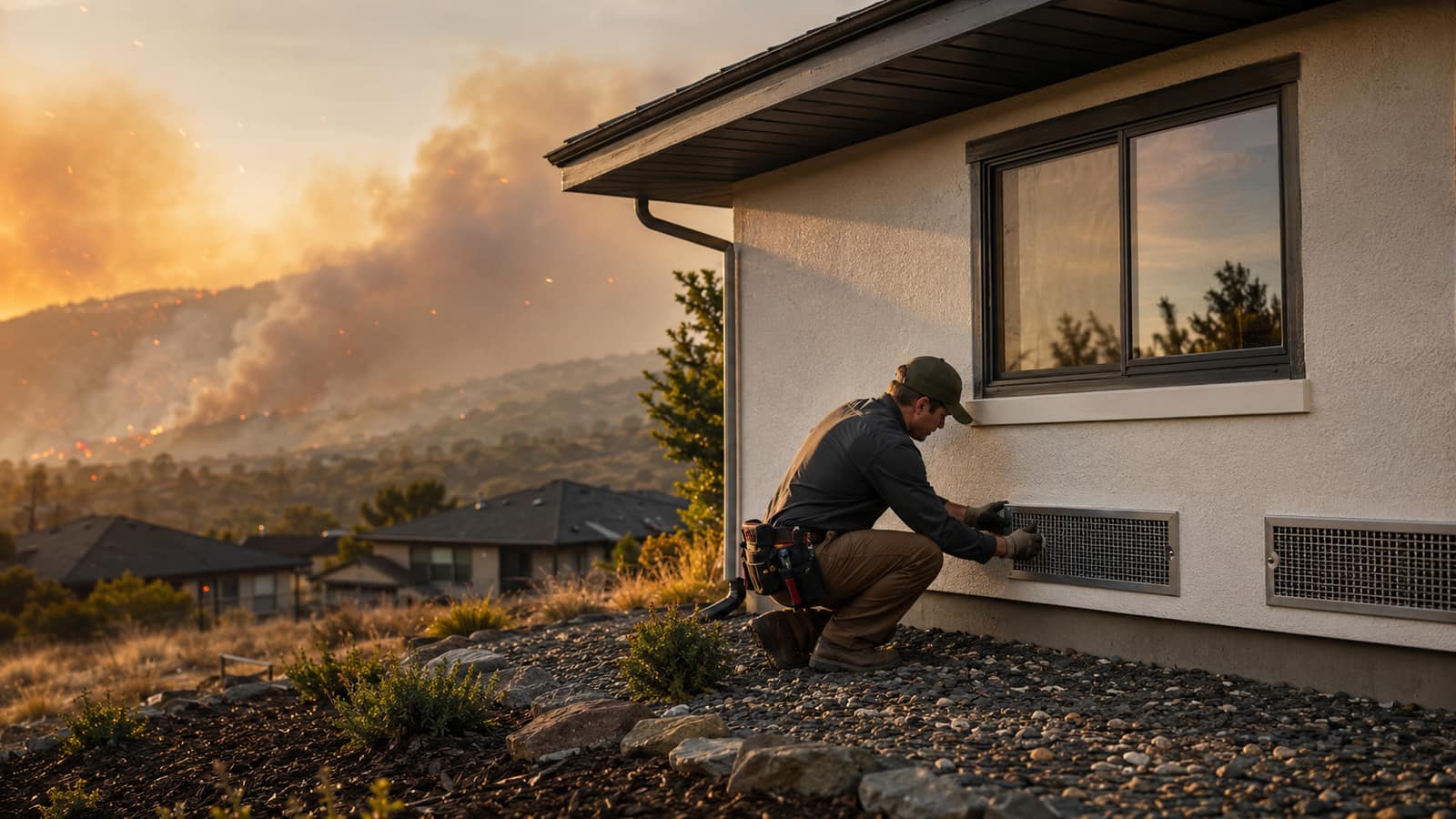
Wind-driven embers can travel ahead of a wildfire and enter attic, soffit, gable, and foundation vents. If they reach insulation, stored belongings, or other combustible material, the home can ignite from the inside. That is why CAL FIRE, NIST, and IBHS all address roofs and protected openings as separate parts of a complete hardening plan.
The clearest evidence yet came from our own neighborhoods. After the 2025 Eaton and Palisades fires, IBHS investigators examined more than 250 properties. Homes with four key features, a Class A roof, noncombustible siding, double-pane windows, and enclosed eaves, had a 54 percent likelihood of avoiding damage. Homes with more than a quarter of their first five feet covered in vegetation or combustible material had a 90 percent likelihood of damage or destruction, whatever their roof was made of. Protection worked as a sealed system or barely worked at all.
Compare the job each project does
Roof surface protection
The re-roof
$15,000 to $30,000
Typical project cost
$15,000 to $30,000, often more with fire-rated upgrades
What it protects against
Direct flame, radiant heat, and embers landing on the roof surface
When to prioritize it
The roof is wood shake, damaged, near the end of its life, or not Class A rated
What it does not solve
Open vents, gaps, combustible debris, and other ways embers can enter or collect
Best fit: the roof is combustible, damaged, near the end of its life, or not adequately fire-rated
Ember-entry protection
The vent retrofit
$1,500 to $4,500
Typical project cost
$1,500 to $4,500 for the whole house
What it protects against
Wind-driven embers entering attics, crawl spaces, and other concealed areas
When to prioritize it
The roof is serviceable and Class A rated, but vents still allow ember entry
What it does not solve
A combustible or failing roof, debris-filled gutters, or other vulnerable parts of the home
Best fit: the roof is serviceable and fire-rated, but older vents still leave ember-entry openings
When a new roof should come first
Prioritize a roofing evaluation if you have wood shakes or wood shingles, visible damage or leaks, missing or deteriorated material, an older roof approaching replacement, or no confirmation that the assembly is Class A rated. A qualified roofer can identify the material, condition, and rating and tell you whether repair or replacement is needed.
This article is not advice against reroofing. It is advice against replacing a serviceable Class A roof without first checking whether other parts of the house remain open to embers.
When vents may be the better-value first step
If the roof is confirmed to be Class A rated and in good condition, inspect the vents next. Many older homes have open louvers, plastic components, or mesh with openings large enough for small embers to pass through.
A whole-home vent retrofit commonly costs far less than reroofing. It does not provide the same protection as a roof; it solves a different vulnerability. Economically, that can make vents the stronger next investment when the roof does not need work.
Check your roof in 30 seconds
Two questions, based on the same rules a wildfire assessor uses.
1. What is on your roof?
What to check before you decide
- Find the roofing documentation or ask a qualified roofer to confirm the material, rating, age, and condition.
- Check the roof surface, edges, flashing, and gutters for damage, gaps, and accumulated debris.
- Identify attic, soffit, gable, foundation, and crawl-space vents. Note open louvers, plastic parts, damaged screens, and larger mesh.
- Look beyond both projects: combustible mulch, plants, stored items, and fencing within the first five feet can expose the home to additional ignition paths.
Our founder lost his own Altadena home in the Eaton Fire, so none of this is theoretical to us. Ready Fire One installs ember-resistant vents; we do not replace roofs, which means we have no roof to sell you. If an assessment finds that the roof is the weak point, we will recommend that you speak with a qualified roofer. If the roof is serviceable and Class A rated, we can help determine whether vulnerable vents should be the next priority. See how every measure compares on our hardening effectiveness and cost ranking, or read about ember-resistant vents and Zone 0 defensible space.
Get the order of work right
A free RF1 assessment reviews the roof, vents, roof edges, and first five feet, then gives you a practical priority list for the home you have today.
Book Your Free Assessment